Guides/Commercial·9 min read·Updated September 4, 2026
Commercial holiday lighting has different rules than a house. Here is how storefronts, retail plazas and hotels plan a display that looks sharp, survives the season and keeps everyone safe.
Key takeaways
- 1Commercial properties need commercial-grade C9 LEDs, weatherproof connections and a layout built for scale, not a residential kit stretched across a bigger building.
- 2Multi-storey storefronts, plazas and hotels usually require boom trucks or aerial lifts rather than ladders, which changes who can safely take on the work.
- 3A single point of contact managing design, install, mid-season checks and takedown matters more for a business with a brand image to protect than for a house.
- 4Property managers should book early in the fall since commercial jobs take longer to schedule around tenant access, parking and business hours.
- 5Liability insurance and WSIB coverage on the installer are not optional details for a commercial property, they are a condition most leases and insurers expect to see.
A house with a string of lights along the eaves is one thing. A retail plaza with six storefronts, a hotel with a four-storey facade, or a shopping centre with a shared parking lot is a different project entirely. The materials have to be tougher, the layout has to read correctly from a moving car on the road outside, and the crew has to work safely at heights that a homeowner's ladder never reaches. Commercial holiday lighting is really a design and logistics problem first, and a lighting problem second.
Why commercial properties need a different approach
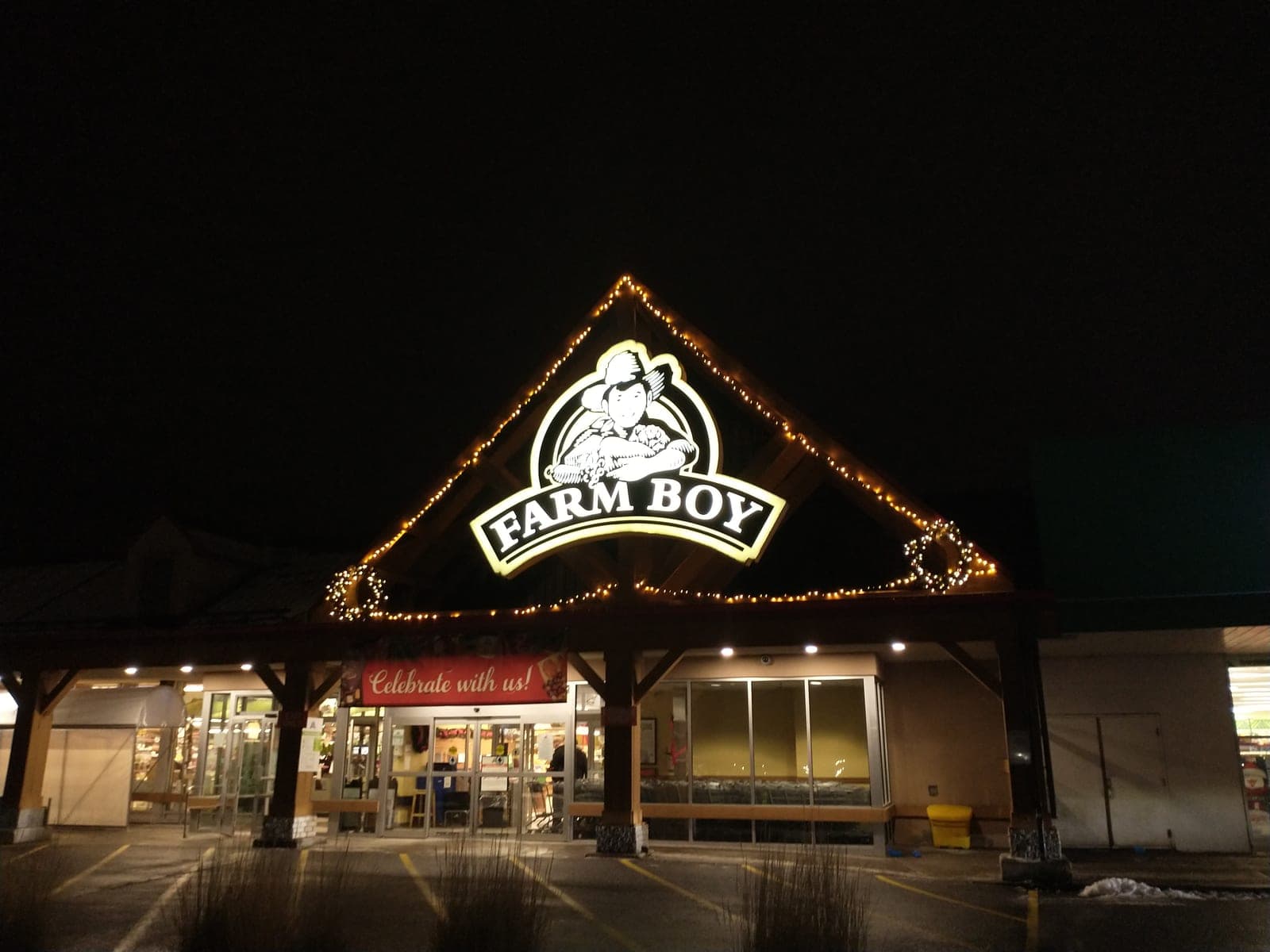
Residential holiday lighting is largely about warmth and tradition. Commercial lighting has a second job on top of that: it has to represent the business. A plaza with a distinguished, evenly lit facade signals that the tenants inside are established and cared for. A storefront with mismatched bulb temperatures or a sagging string sends the opposite message, right at the time of year when foot traffic and impulse visits matter most. Hotels have an added layer, since guests photograph the entrance and share it, and a well-lit porte-cochere or lobby becomes part of the guest experience rather than an afterthought.
Scale is the other obvious difference. A single-family home might need 150 to 300 feet of lighting. A strip plaza with eight units easily needs several thousand feet across rooflines, window trim and shared common areas, and a hotel or office tower can run well beyond that once every floor and architectural feature is accounted for. At that scale, small inefficiencies in the layout, the wiring plan or the crew's approach get multiplied across the whole job.
Design that reads from the road and the parking lot
Most commercial properties are seen from a distance, whether that is a car pulling into a plaza off a main road or a guest approaching a hotel entrance from the highway exit. Design decisions that look fine up close, like a slightly uneven roofline or a colour temperature mismatch between two bulbs, become obvious at a distance because the eye reads the building as one continuous shape. A good commercial layout treats the whole facade as a single composition: consistent bulb spacing along every roofline, matched colour temperature end to end, and enough contrast in warm white or accent colour to hold up against parking lot lighting and passing headlights.
Anchor features get particular attention. A hotel porte-cochere, a plaza's main entrance sign, or a tower's ground-floor storefront windows are the first thing anyone actually looks at, so those areas typically get a heavier concentration of lighting, garland or wreaths than a side elevation that most visitors never see. Festive Holiday Lighting designs commercial layouts around what a customer, guest or tenant actually sees on approach, rather than lighting every available surface evenly. Full details on our commercial process are at /services/commercial-holiday-lighting.
Brand colour is worth raising early in the design conversation. Some businesses want a purely traditional warm white and green look, while others prefer to work a signature brand colour into the accent lighting, particularly around a main entrance or sign. Either approach can look sharp, but it needs to be decided before ordering rather than adjusted midway through install, since colour-matched commercial LED product is typically ordered in the specific quantity a given facade needs.
Commercial-grade materials matter more here
The lights used on a storefront or hotel facade need to survive months of exposure without a homeowner checking on them daily. Commercial-grade C9 LED strands are built with heavier gauge wire, sealed sockets and higher-rated bulbs than consumer-grade strings sold at a big box store, and that difference shows up as fewer outages over the season rather than as anything visible on day one. On a large property, a single failed section is far more noticeable than on a house, because it sits along a roofline that hundreds of people drive past every day.
Weatherproofing the connections is just as important as the bulbs themselves. Every splice, plug and extension needs a sealed, outdoor-rated connection, particularly on a flat commercial roof where water can pool, or along a hotel facade exposed to wind off a parking structure. Garland and wreaths used on storefront windows or entrance columns should be UV-rated and pre-lit with the same commercial-grade LEDs as the roofline, not a residential-grade product that fades or dulls by mid-January.
Access equipment: why ladders are not the answer here
A two-storey house can usually be handled with extension ladders and careful footing. A three or four storey hotel facade, a plaza with a raised parapet roofline, or a mall entrance with a high atrium cannot be safely reached that way, and trying to force a ladder-based approach onto that kind of building is where commercial jobs go wrong. This is where boom trucks and aerial lifts come in. Festive Holiday Lighting runs JLG and Genie boom trucks and lifts specifically for tall trees, high rooflines and multi-storey commercial buildings, which means the crew reaches the work platform safely instead of improvising with extension ladders lashed together.
Access equipment also changes the schedule. A lift needs a level, clear staging area, and on a property with active tenants, deliveries and customer parking, that staging has to be planned around business hours rather than dropped in wherever is convenient. Coordinating lift access is one of the reasons commercial quotes take a site visit rather than a phone estimate.
There is also a public-facing safety dimension to working around an operating business. A boom truck staged in a plaza parking lot or in front of a hotel entrance needs a cordoned work zone, clear signage and awareness of pedestrian and vehicle traffic moving through the site during business hours. An experienced commercial crew builds this staging into the job automatically, coordinating with property management on timing so the equipment footprint interferes with customers and guests as little as possible while the work is underway.
Insurance and WSIB compliance are not optional on a commercial site
Most commercial leases and property insurance policies require any contractor working on the building to carry liability coverage and be compliant with workplace safety regulations, and holiday lighting contractors are no exception. Festive Holiday Lighting carries five million dollars in liability insurance and runs WSIB-compliant crews, which is the kind of documentation a property manager needs on file before a boom truck is allowed onto the lot, and the kind of protection that matters if anything ever goes wrong on a job involving aerial equipment and public foot traffic.
Planning the timeline around business operations
Commercial installs almost always take longer to schedule than a residential job because access has to work around tenants, deliveries, customer parking and business hours. A plaza with eight units means coordinating around eight sets of operating hours, and a hotel install has to avoid blocking the main entrance during check-in periods. Booking early in the fall, well before the first week of November, gives enough runway to plan lift staging, confirm access windows with tenants or hotel operations, and get the install finished before the property wants to be lit for the season.
Mid-season maintenance is also part of a properly run commercial contract. A single failed strand on a house is a minor annoyance; the same failure on a hotel facade or a plaza's main sign is visible to every guest and customer for weeks unless someone checks on it. A maintenance visit partway through the season catches outages, loose connections from wind, or anything knocked out of place, before it becomes a visible gap in the display.
For a property with multiple tenants, it is also worth designating a single point of contact on the business side, whether that is a property manager or a head office facilities lead, so the installer is not fielding separate requests from each individual storefront. This keeps the design consistent across the whole property and avoids one unit's lighting looking different in style or colour temperature from the unit next door.
Takedown, storage and next year
Commercial takedown has the same access requirements as install, meaning boom trucks or lifts are needed again after January 6 to bring everything down safely. For a property with a long-term contract, storing the commercial-grade lighting, garland and hardware between seasons means next year's install starts with a known inventory rather than a fresh materials order, which shortens the fall install window and keeps year-over-year costs more predictable. This is one of the practical advantages of working with the same installer across seasons rather than re-tendering the job every year.
Getting a commercial quote
Commercial holiday lighting quotes for storefronts, plazas and hotels are free and typically start with a site visit to measure rooflines, identify access points for lift equipment, and understand the property's brand and any existing lighting infrastructure. Property managers, hotel operations teams and business owners across Hamilton, Burlington, Oakville, Mississauga, Brampton and the surrounding area can request a quote through /contact or by calling (289) 426-5764.
Frequently asked questions
How is commercial holiday lighting different from residential lighting?
Commercial lighting uses heavier-duty, commercial-grade C9 LED strands, covers a much larger area, and usually requires boom trucks or aerial lifts to reach multi-storey facades safely, rather than the extension ladders used on a typical house.
Do you need aerial lift equipment for every commercial job?
Not every job, but many do. Single-storey storefronts can often be handled with ladders, while multi-storey hotels, plazas with raised parapets, and tall trees on commercial properties typically need a boom truck or genie lift, which Festive Holiday Lighting runs for exactly these situations.
Why does insurance matter for a holiday lighting contractor?
Most commercial leases and property insurers require any contractor on site, especially one operating aerial equipment, to carry liability coverage and be compliant with workplace safety rules. Festive Holiday Lighting carries five million dollars in liability insurance and runs WSIB-compliant crews.
How far in advance should a plaza or hotel book holiday lighting?
Commercial jobs generally need more lead time than residential ones because access has to be coordinated around tenants, deliveries and business hours. Booking in early fall gives enough time to plan lift staging and confirm access before the property wants to be lit.
Is mid-season maintenance included in a commercial lighting contract?
It should be. A check-in partway through the season catches outages or wind damage before they sit visible on a facade for weeks. This is a standard part of how Festive Holiday Lighting structures commercial contracts.
Can the same lighting be stored and reused next season?
Yes. Commercial-grade lighting and hardware are built to be stored and reused across multiple seasons, which is one reason many properties keep the same installer year over year rather than sourcing new materials each fall.
Free quote
Want us to just handle it?
Send a photo of the house and we'll come back with a price within a day.
Keep reading
Commercial · 8 min
Municipal and BIA Holiday Lighting Programs: How Towns Get It Done
Downtown holiday lighting on a main street or in a BIA does not happen by accident. Here is how municipalities and Business Improvement Areas plan, budget and execute a streetscape program.
Costs · 8 min
How Much Does Professional Christmas Light Installation Cost in Ontario?
Every quote for professional Christmas light installation is different because every roofline, tree count and product mix is different. Here is what actually moves the price.
Planning · 7 min
When to Book Christmas Light Installation (and Why September Matters)
The best-looking Christmas displays are rarely the result of a last-minute call. Here is how the seasonal booking calendar actually works and why late September is the smart cutoff.